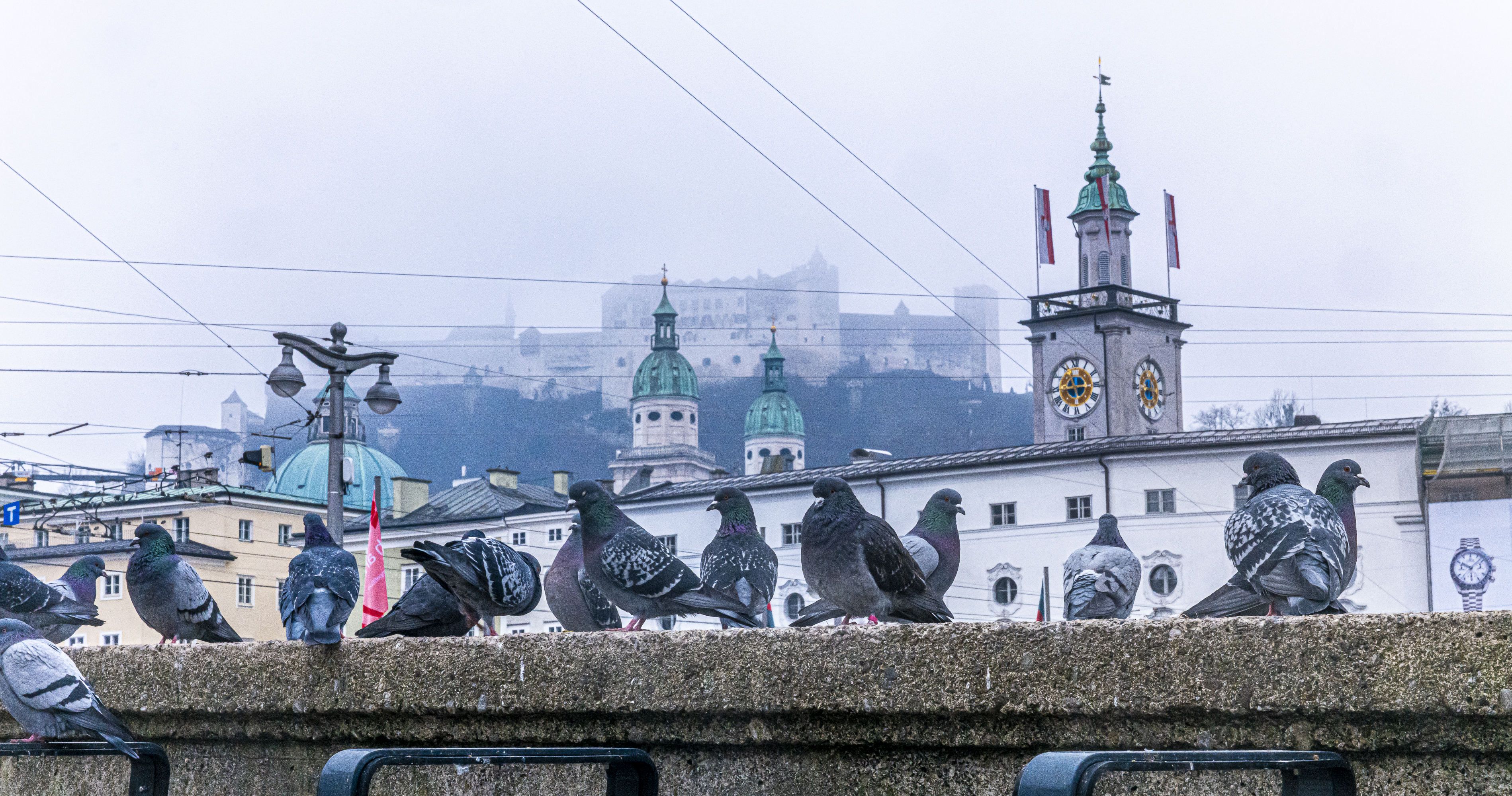
Along the bank of the Salzach, silhouettes moved, appearing and vanishing like figures from a dream.
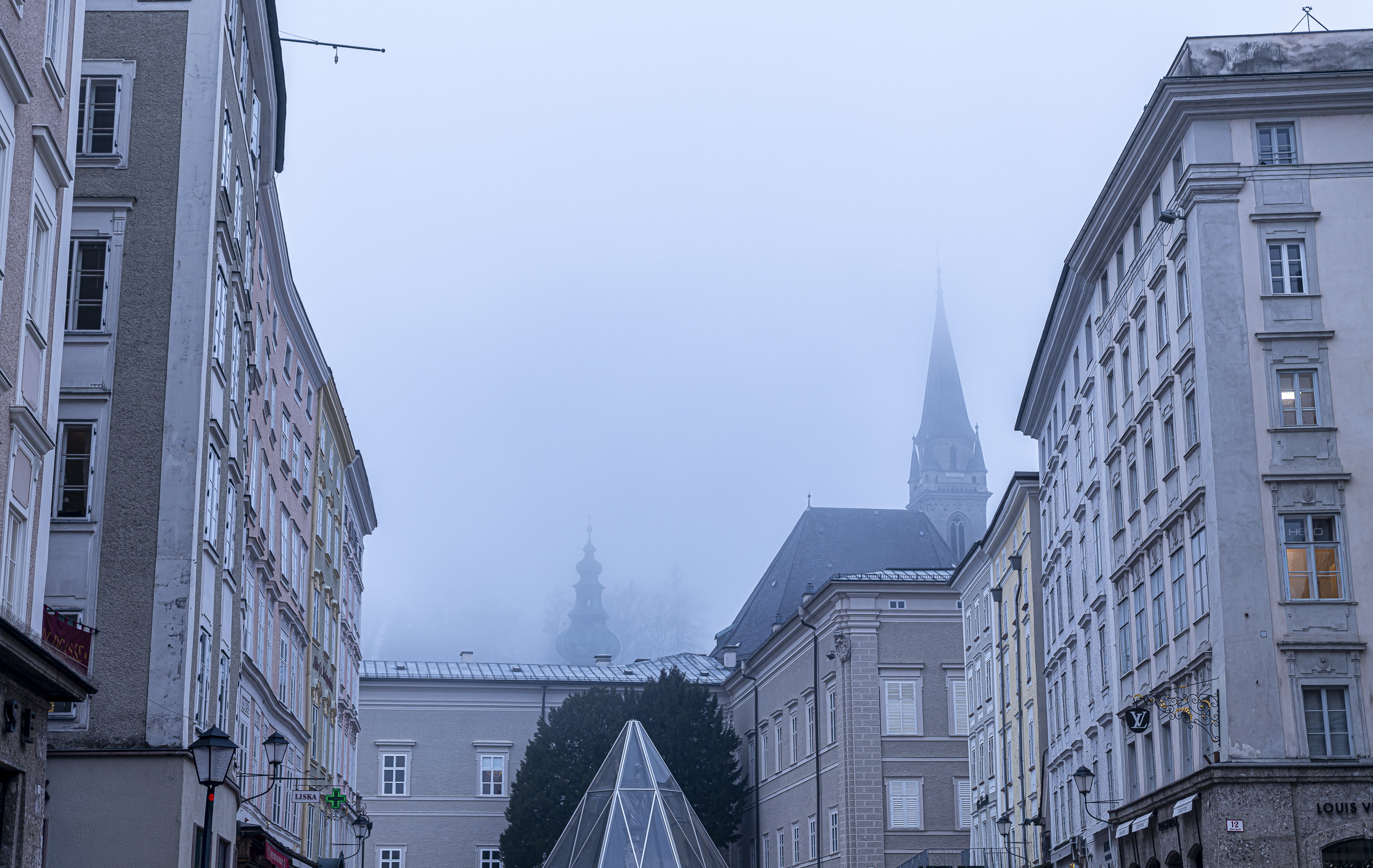
I write this evening from my lodgings, still with the cold in my bones and uncertain whether I have truly seen Salzburg. I arrived this morning with fog. Not just any fog, but an immobile fog, so dense it seemed to have been there for centuries, as if it were as much a part of the city as the stones or the river. I had traveled for days with a mental image of what I would find, and what I found was an erased city. I came to see the remains of an eight-hundred-year principality dissolved by decree, and the fog would not let me see even the street across from me. You must admit it has a certain irony.
I walked a great deal this morning without truly knowing where I was walking. The river was a sound, the streets were narrow or wide according to the echo of my footsteps, and the cathedral—which I had been told dominated the city from every angle—was nothing more than a suspicion, something vast that altered the density of the whiteness without ever revealing itself.
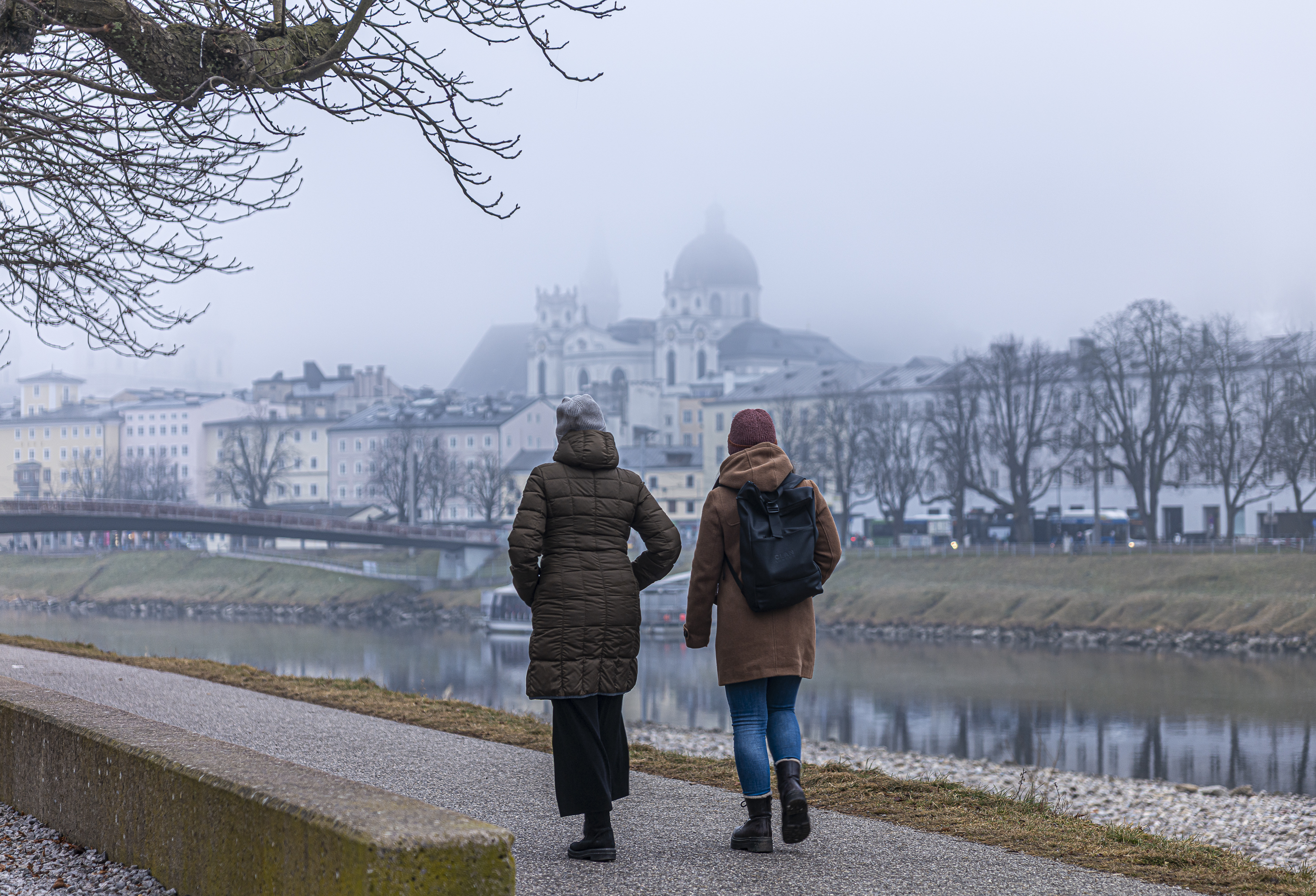
Along the bank of the Salzach, silhouettes moved, appearing and vanishing like figures from a dream.
Along the bank of the Salzach, silhouettes moved, appearing and vanishing like figures from a dream, passersby whom the fog swallowed as they moved away. The streetlamps remained lit at mid-morning, illuminating for no one a city that could not be seen, like a servant who continues to set the table in a house whose master will not return.
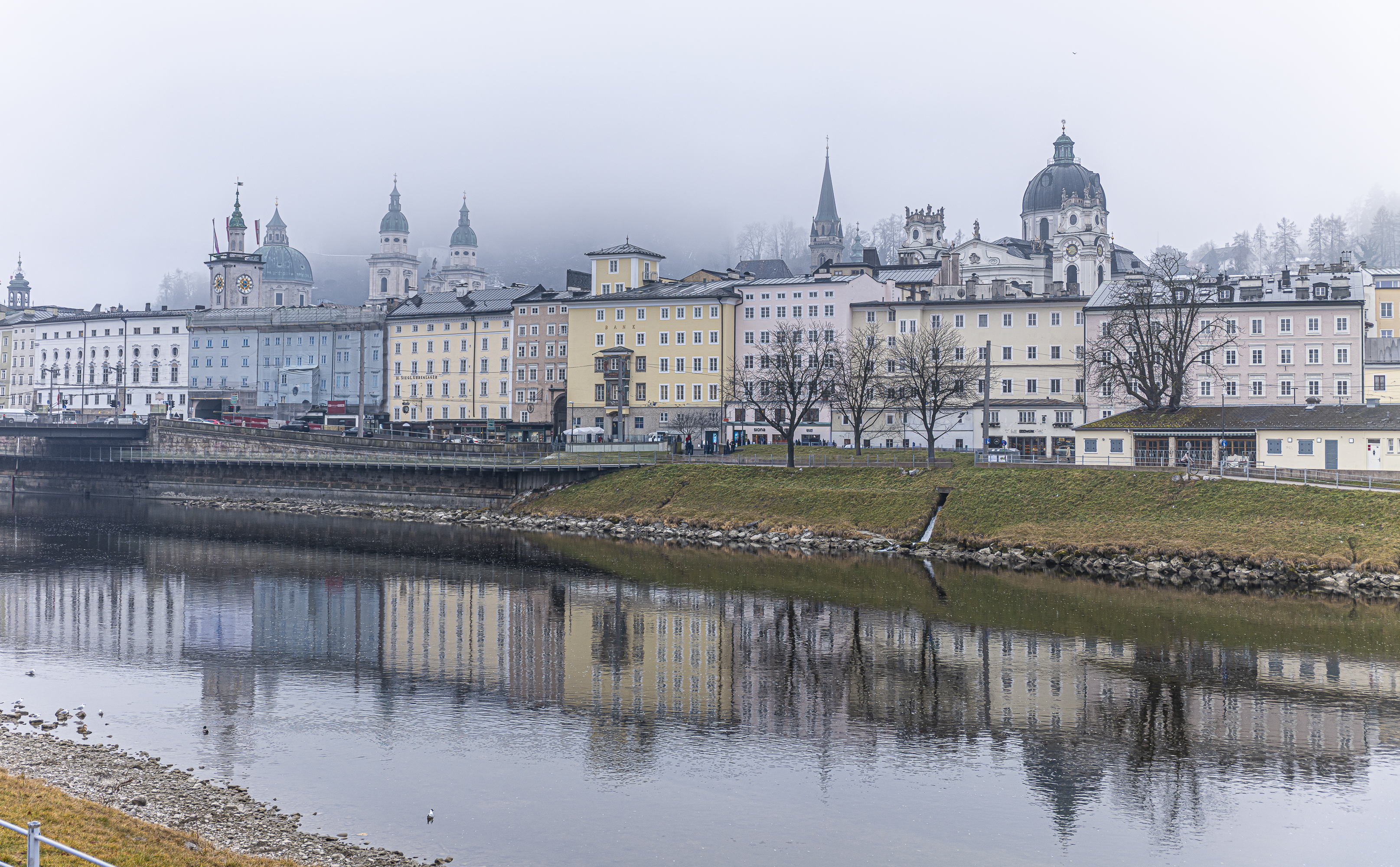
At some point I crossed a bridge. I knew it was one because the ground changed beneath my feet and the sound of water opened up below me. I looked down and for a few seconds I saw them: domes, towers, the entire profile of a city trembling in the water. Salzburg existed only there, inverted, reflected in an invisible river. I raised my eyes and there was nothing.
And then, without warning, the fog opened. It did not lift: it tore. A strip pulled aside like a poorly drawn curtain and up there, exactly where I knew it had to be but much closer and much larger than I had imagined, the fortress appeared.
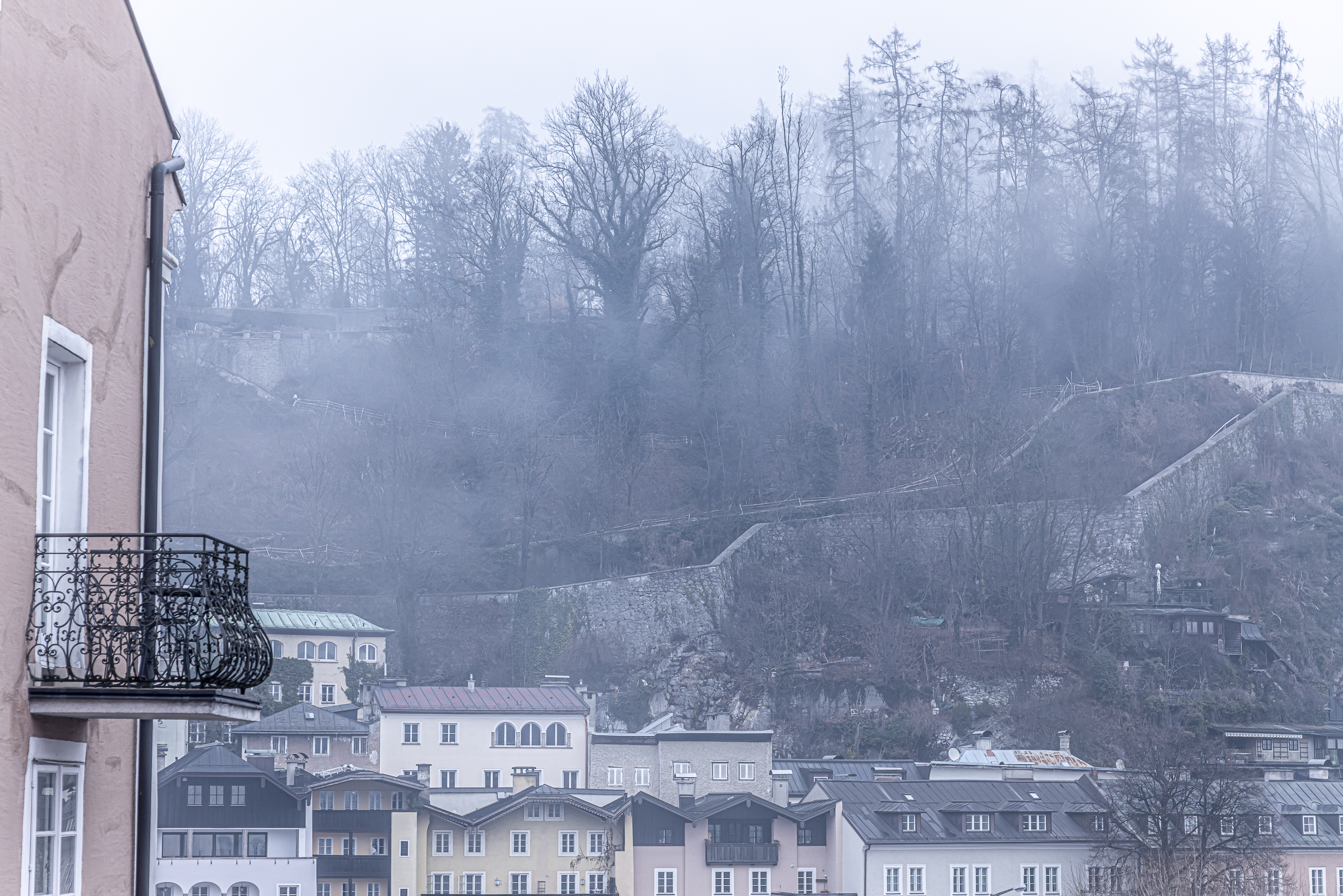
A tower suspended in the void, battlements floating above the city like the remains of a castle hung from the sky.
I did not see it whole. I saw fragments. A tower suspended in the void, a section of wall resting on nothing visible, battlements floating above the city like the remains of a castle someone had dismantled and hung from the sky. There was no mountain beneath, no slope, nothing to explain why that mass of stone was up there instead of having collapsed centuries ago. It lasted an instant. The fog closed again and Hohensalzburg vanished as if it had never existed.
I confess I felt something akin to fear. I know, I know—you warned me not to make this journey a sentimental enterprise. But it was not a rational fear—I know perfectly well what a fortress is and what fog is—but something more ancient, more visceral. What I had glimpsed did not entirely belong to this world. It was a ghost. The ghost that the decree could not eliminate. Napoleon dissolved the principality, dissolved the power, dissolved the titles, but he could not dissolve this: Salzburg's capacity to appear and disappear in the mist like something remembered in a dream that upon waking one does not know was real.
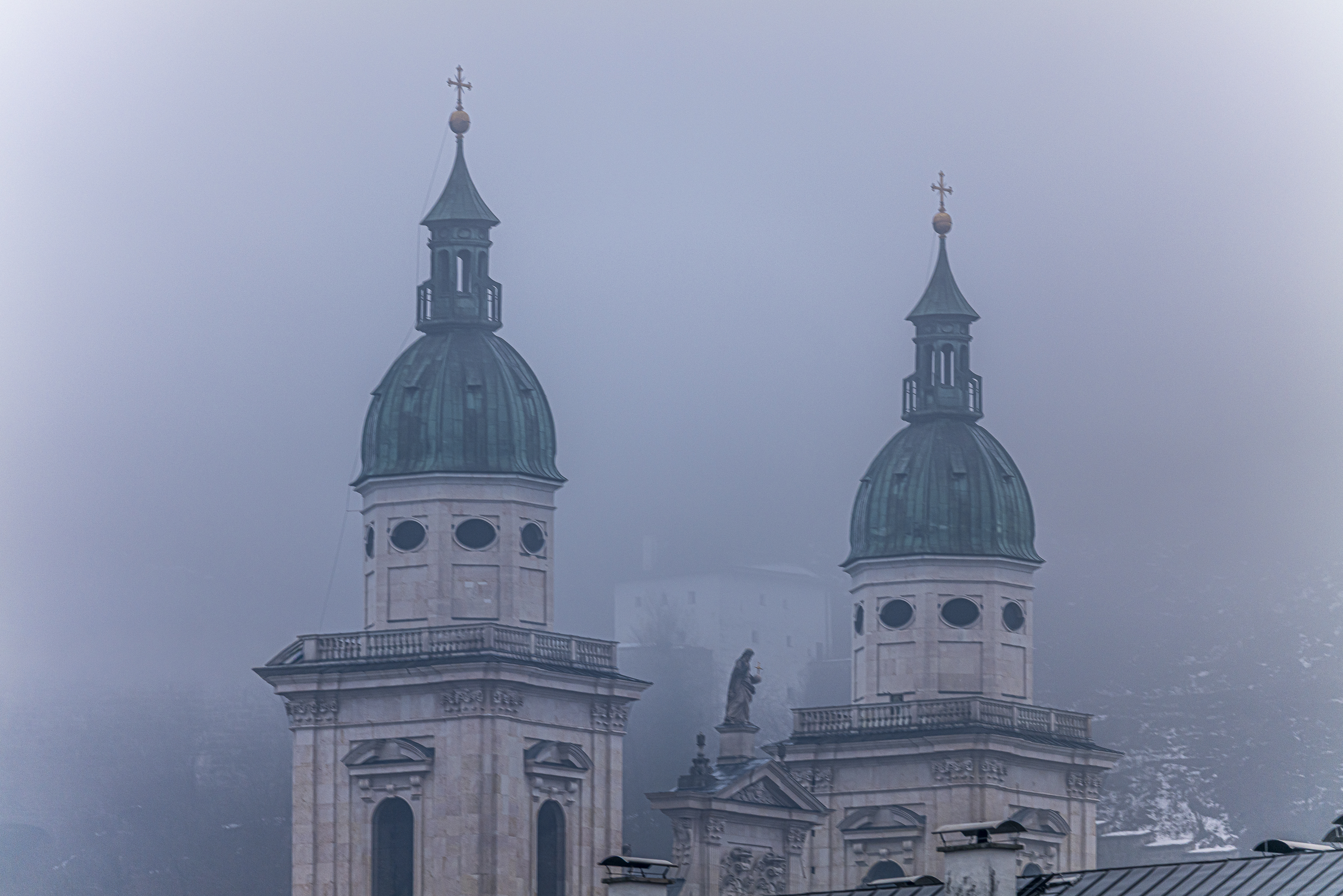
When the fog thickened again I continued walking, but differently now. I ended up in what must have been the main square—the space suddenly opened and the murmur of a fountain replaced that of my footsteps—and I stood still for a long while, surrounded by enormous forms I could not decipher.
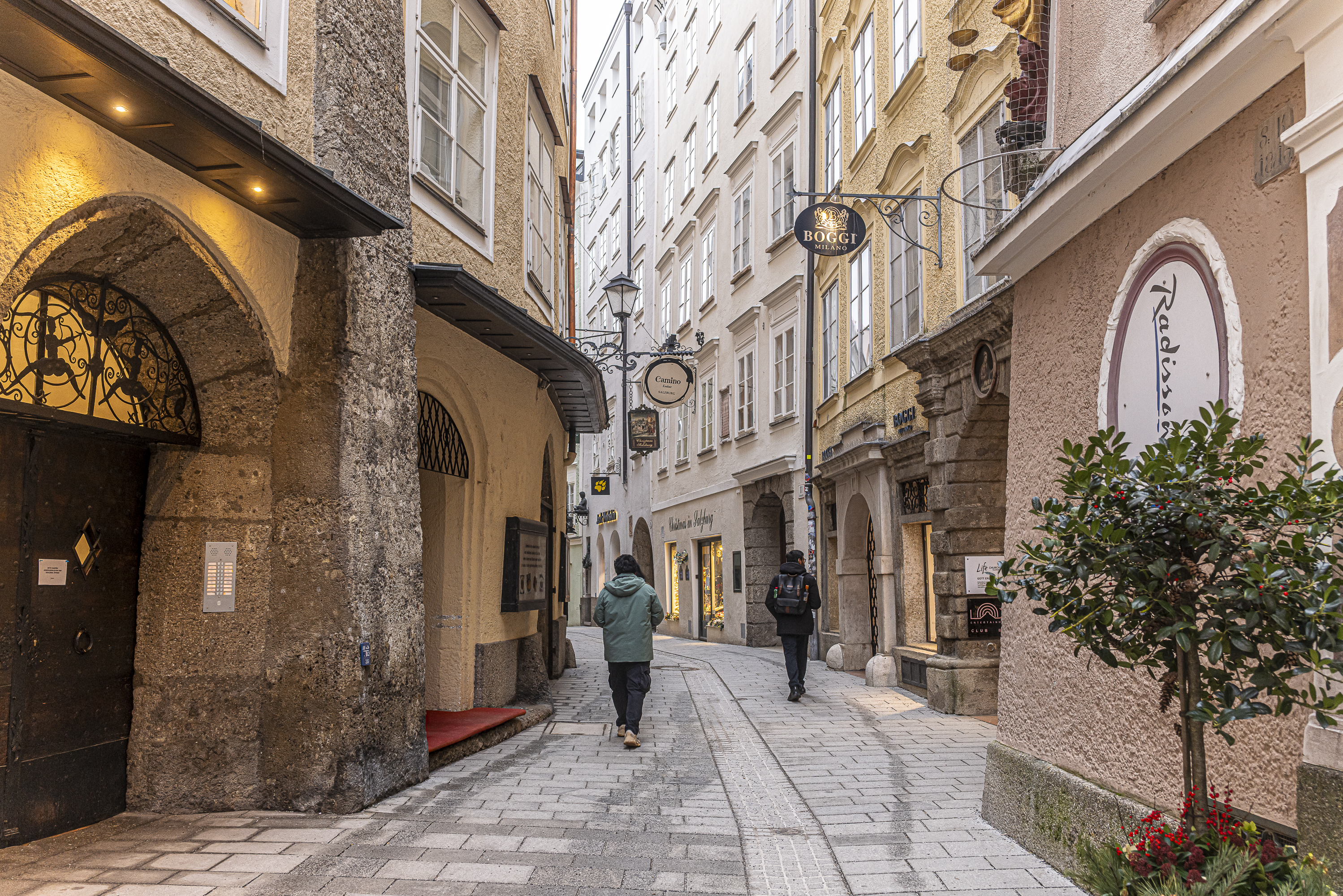
The streets were narrow or wide according to the echo of my footsteps.
I knew I was at the exact center of power and that everything surrounding me had been raised to manifest it, and yet I could see absolutely nothing. Only hear the water and feel the cold and know that I was being watched by a city that would not let itself be watched.
It was the smell of firewood that returned me to the world. Someone had lit a fireplace nearby and that domestic smell, so alien to the invisible grandeur surrounding me, reminded me that I had not eaten for hours. I headed toward the monastery of St. Peter, where I had been recommended an excellent inn. Tomorrow I will tell you if the fog permitted me to find it.
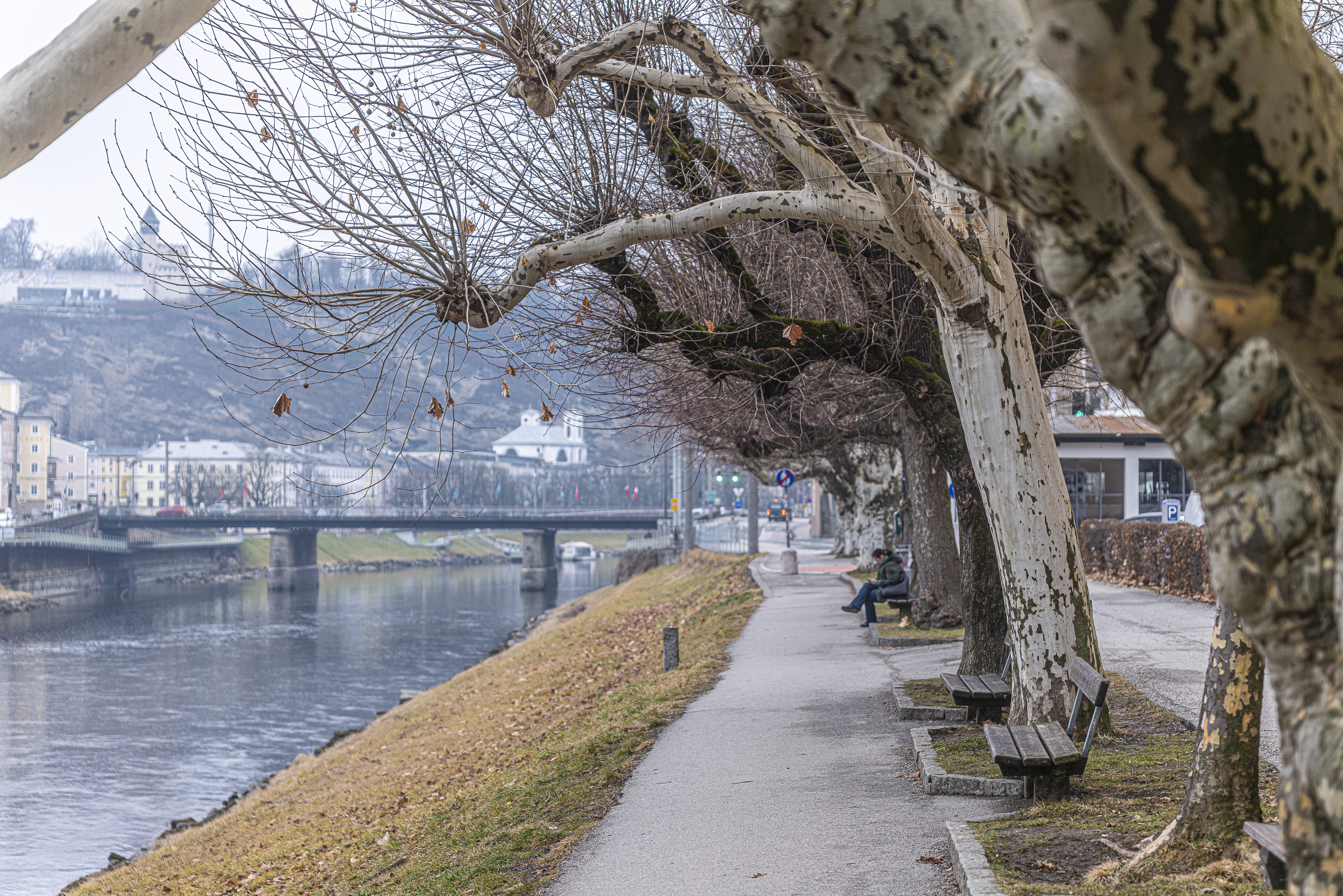
They have told me it will lift tomorrow. Part of me would prefer it did not.